

Inside ITER: Physics, Modelling, and AI Challenges of a Burning Plasma
Preparing for ITER Operation: The Physics, Modelling and Computing Challenges of a Burning Plasma
Speakers
Content navigation
Description
Abstract: ITER, now under assembly in southern France, will be the first fusion device to produce a burning plasma, that is, one predominantly heated by its own fusion reactions. This talk will introduce the ITER Project and its updated baseline before turning to the scientific preparations for operation: the simulation of plasma scenarios from start-up on a tungsten first wall through to Q=10 operation, the validation of models against today's machines, and the integrated modelling infrastructure (IMAS) that ties them together. I will also show how AI is beginning to reshape this work. Examples range from machine-learning surrogates that accelerate physics models ten-thousand-fold, to LLM agents performing signal discovery and code generation on operating tokamaks, to AI-assisted analysis and software development across our modelling programme. These preparations sit at the intersection of plasma physics, applied mathematics, scientific computing and engineering. With first plasma operations now on the horizon, they will determine how quickly ITER can turn a burning plasma from an ambition into an experimental reality.
Light refreshments will be served afterwards.
About the speaker:
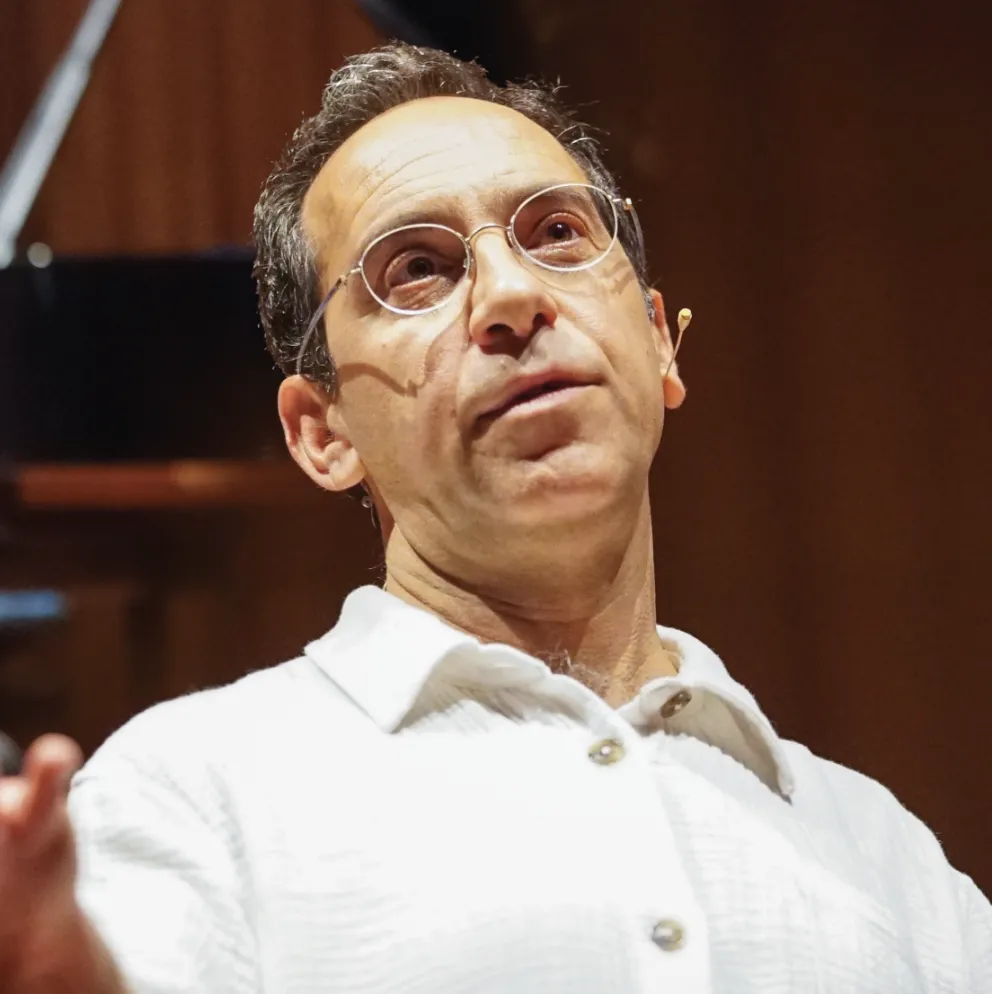
Simon Pinches leads the Plasma Modelling & Analysis Section at the ITER Organization, where he has worked since 2012. His section is responsible for ITER's Integrated Modelling & Analysis Suite (IMAS), the physics software infrastructure that will support the planning and analysis of every ITER pulse, and for the plasma physics analysis underpinning ITER's Research Plan. Before joining ITER, he worked at Culham Centre for Fusion Energy on MAST and JET in the UK and the Max Planck Institute for Plasma Physics in Garching on ASDEX Upgrade, specialising in the physics of energetic particles and MHD stability in burning plasmas. He developed the HAGIS code and serves as Co-Chair of the ITPEA Topical Group on Energetic Particle Physics. He holds a PhD in plasma physics from the University of Nottingham.
Location
In-person: Seminar 1.33, Hanna Neumann Building #145
Online: Zoom link