

Applied & Computational Mathematics
The Applied & Computational Mathematics research area studies a range of applied mathematical topics, including theoretical aspects of computational algorithms, computational PDEs, inverse problems, numerical linear algebra, computational topology, optimisation, data science, environmental science, mathematical modelling, theoretical plasma physics, and theoretical astrophysics.
About
The Applied & Computational Mathematics research area studies a range of applied mathematical topics, including theoretical aspects of computational algorithms, data science, mathematical modelling, and theoretical astrophysics. The group members have a wide range of research interests in developing numerical methods for solving various application problems. We focus on algorithm design, numerical implementation and theoretical analysis.
Capabilities
The research of our group addresses the following aspects of computational and applied mathematics:
- Computational PDEs
- Computational topology and algebraic geometry
- Environmental science
- Inverse problems
- Modelling
- Numerical linear algebra
- Optimisation
- Plasma physics
- Theoretical astrophysics
Reasons to work with us
Our group members have long-term experience in their research areas, which typically ties into practical applications and government or industrial partners. Examples include fluid dynamics with the River Darling Basin Authority, inverse problems with the Australian Signals Directorate, fusion energy with the Australian Nuclear and Science and Technology Organisation, and seismology with GeoSciences Australia. Completed HDR students routinely find employment in top international research agencies (e.g. US Department of Energy), or pursue higher degree studies in world-leading universities in the US and UK (e.g. Oxford).
Projects
Members
Researcher

Professor

Senior Fellow / Professor

MSI Director
Professor
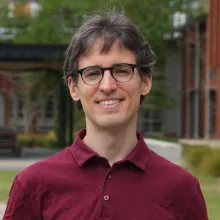
Lecturer

MSI-Google Fellow

Professor

Associate Professor

MSI-Google Fellow

Postdoctoral Fellow
MSI-Google Fellow
Associate Professor

Associate Professor and Director, Mathematical Data Science Centre
Postdoctoral Fellow
Retired and Honorary
Emeritus Professor

Emeritus Professor

Emeritus Professor

Emeritus Professor
Student
PhD
PhD
PhD
MPhil
PhD
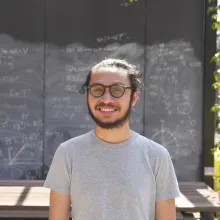
PhD
PhD
PhD
PhD
MPhil
PhD
PhD
PhD
PhD
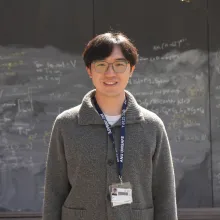
PhD