

Analysis & PDE
The Analysis & PDE research area covers a breadth of topics, including harmonic analysis, microlocal analysis, geometric and physical variational problems, elliptic and parabolic partial differential equations, dispersive equations, geometric partial differential equations, geometric evolutions, operator algebras, among other related research topics.
About
The Analysis & PDE research area in MSI studies fundamental questions about functions and continuous processes. We study partial differential equations, harmonic analysis, microlocal analysis, stochastic analysis, mathematical physics, abstract analysis, geometric analysis, differential geometry, symplectic geometry and noncommutative geometry.
Capabilities
Each faculty member runs their own independent research program, often involving postdocs, PhD students, masters students and honours students, and with numerous international collaborators.
- Ben Andrews: geometric partial differential equations (including mean curvature flow and Ricci flow), geometric variational problems (including isoperimetric problems and eigenvalue inequalities), and geometric approaches to the analysis of differential equations.
- Andrew Hassell: microlocal analysis and PDE applied to spectral theory, quantum chaos, nonlinear dispersive equations, and rough wave equations.
- Qiuye Jia: partial differential equations, mathematical physics, and inverse problems via techniques and tools from microlocal analysis and harmonic analysis
- Mat Langford: Ricci flow, mean curvature flow and flows of hypersurfaces by nonlinear functions of their curvature, related nonlinear elliptic and parabolic PDE, and applications to topology, geometry and general relativity
- Galina Levitina: Noncommutative geometry, spectral theory, operator theory and mathematical physics.
- Junhwi Lim: operator algebras, functional analysis, quantum symmetries
- Brett Parker: Symplectic geometry and Gromov-Witten and related invariants using exploded manifolds.
- Pierre Portal: partial differential equations analysed using stochastic analysis to understand random dynamics at the microscopic level, and harmonic analysis to understand oscillatory patterns at the macroscopic level.
- Alex Rose: Harmonic analysis, Fourier analysis, additive combinatorics, mathematical physics, mathematical data science
- James Tener: Operator algebras, functional analysis, and representation theory to study the mathematical foundations of quantum field theory
- Bryan Wang: geometric properties of moduli spaces in symplectic topology and gauge theories in low dimensions as well as invariants from these moduli spaces.
- Griff Ware: banach algebras
- Xiaoxu Wu: Wave turbulence; mathematical problems in quantum computing; long-time behaviour of solutions to dispersive PDEs
- Po Lam Yung: harmonic analysis, particularly function spaces (such as Sobolev spaces), singular integrals, oscillatory integrals, and related problems in Fourier restriction theory.
Reasons to work with us
Work with world-leading mathematical analysts. The quality of our faculty is shown by numerous awards and honours, including Laureate Fellowships, Future Fellowships, Fellows of the Australian Academy of Science, ICM addresses, and medals including the Morningside Medal, Ambrosetti Medal, and several Australian Mathematical Society Medals.
Many of our PhD graduates have gone on to stellar careers in academia, while others have had outstanding careers in industry and the private sector.
Projects
Members
Emeritus

Emeritus Professor

Honorary Professor

Emeritus Professor
Retired Fellow
Emeritus Professor

Emeritus Professor

Honorary Professor
Researcher
Professor
Associate Director (Research)
MSI Fellow

Professor
ARC Laureate Fellow

Postdoctoral Fellow

MSI Fellow
ARC Future Fellow
Senior Lecturer
ARC DECRA Fellow
MSI Fellow
Senior Lecturer
MSI Colloquium Organiser
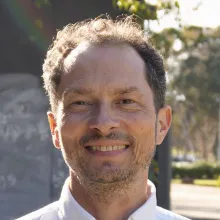
Associate Professor
Senior Lecturer

Associate Professor
HDR Convener
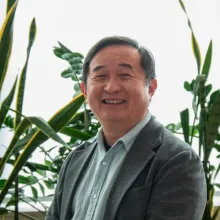
Associate Professor
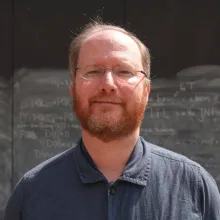
Lecturer
Undergraduate Convenor
Postdoctoral Fellow
Student
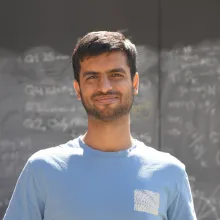
PhD
PhD